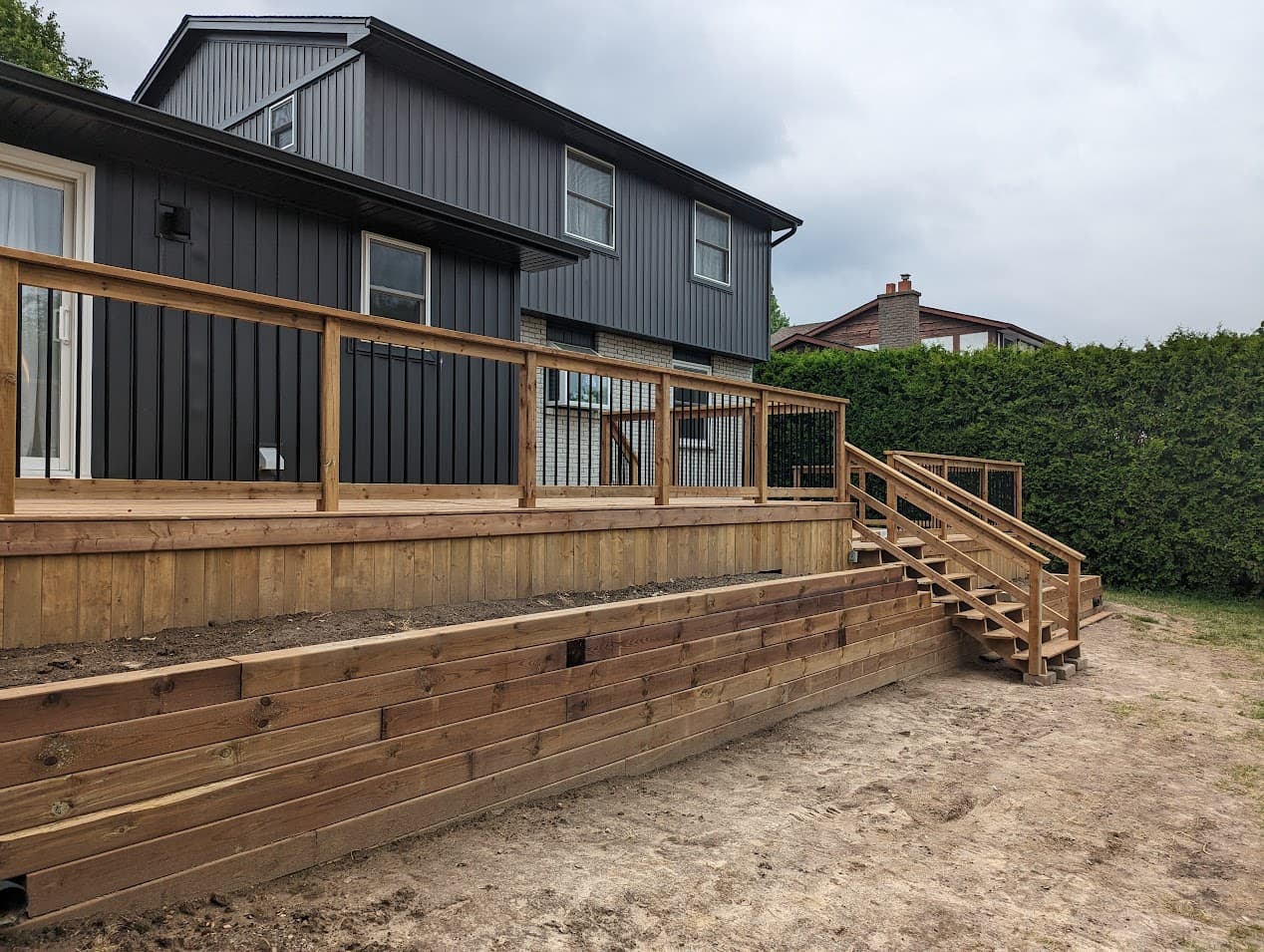
A retaining wall is a significant investment. With proper maintenance, most well-built retaining walls will last decades — even an entire lifetime. The good news: most retaining wall maintenance is simple, inexpensive, and takes only a few hours per year.
Here's what you should be doing to protect your retaining wall investment.
1. Keep Drainage Outlets Clear
This is the single most important maintenance task for any retaining wall. Drainage pipes and weep holes installed during construction allow water to escape from behind the wall — if they get blocked, hydrostatic pressure builds up and is the leading cause of retaining wall failure.
Twice a year (spring and fall), inspect all drainage outlets and weep holes. Remove any debris, sediment, or vegetation blocking them. If you're not sure where your drainage outlets are, look for small pipes or open gaps between blocks at the base of the wall.
2. Inspect for Movement or Shifting
Walk along your retaining wall at least once a year and look for:
- Any portion of the wall that appears to be leaning or bowing outward
- Blocks or sections that have shifted out of alignment
- Gaps opening up between blocks or in mortar joints
- Settlement at the base or corners of the wall
Minor movements caught early can often be repaired at low cost. The same problem left for a few years can require major reconstruction. Early intervention is always less expensive than waiting.
3. Manage Vegetation Behind and At the Base
Tree roots are one of the most destructive forces a retaining wall faces. Large trees planted near a retaining wall can have roots that grow under or behind the wall, causing movement and structural damage.
- Avoid planting large trees within 3–5 metres of a retaining wall
- Keep grass and groundcover trimmed at the base of the wall
- Remove woody vegetation growing in wall joints before it becomes established
- Be cautious with climbing plants on retaining walls — roots can work into cracks over time
4. Watch for Erosion Behind the Wall
If you notice soil eroding out from behind the wall, through block joints, or at the base, this indicates a drainage issue that needs attention. Soil loss behind the wall undermines the structural fill that the wall depends on for support.
Address erosion early by having the drainage system inspected and repaired before more serious structural problems develop.
5. Concrete and Block Wall Maintenance
Concrete and block retaining walls require minimal maintenance beyond the drainage and inspection tasks above. However, watch for:
- Efflorescence: White mineral deposits on concrete or block surfaces indicate water moving through the wall. It's usually harmless aesthetically but signals a drainage issue worth monitoring.
- Cracks: Hairline cracks are generally normal in concrete. Wide cracks (over 6mm), horizontal cracks, or cracks that are growing should be assessed by a professional.
- Block face spalling: Freeze-thaw cycling can cause concrete block faces to chip or spall. This is primarily aesthetic but severely spalled blocks may need replacement.
6. Wood Wall Maintenance
Wood retaining walls need more active maintenance than concrete or block because wood is a living material that degrades over time.
- Stain and seal every 2–4 years: A penetrating oil-based stain protects against moisture and UV degradation. When water no longer beads on the surface, it's time for a fresh application.
- Check hardware: Inspect screws, bolts, and any metal hardware annually. Replace any fasteners showing significant rust.
- Test for rot: Use a screwdriver to probe suspect areas. Soft spots indicate rot that should be replaced before it spreads to structural members.
- Reapply end-grain sealer: Cut ends of boards are the most vulnerable to moisture entry. Keep these sealed.
7. After Heavy Rain Events
Ontario can get heavy rainfall events, especially in spring. After any significant rain event, check your retaining wall for:
- Signs of soil movement or slumping behind or at the base of the wall
- Drainage outlets running properly (they should drain freely during and after rain)
- Any new cracking or movement
When to Call a Professional
Some warning signs require professional assessment rather than DIY maintenance:
- Any visible bowing or leaning of the wall
- Horizontal cracks in concrete or mortar
- Significant soil erosion behind or beneath the wall
- Multiple blocks that have shifted out of alignment
- Drainage that was working before but has stopped
Contact us for a free assessment if you're concerned about your retaining wall's condition. Catching problems early almost always saves money compared to waiting until failure occurs.