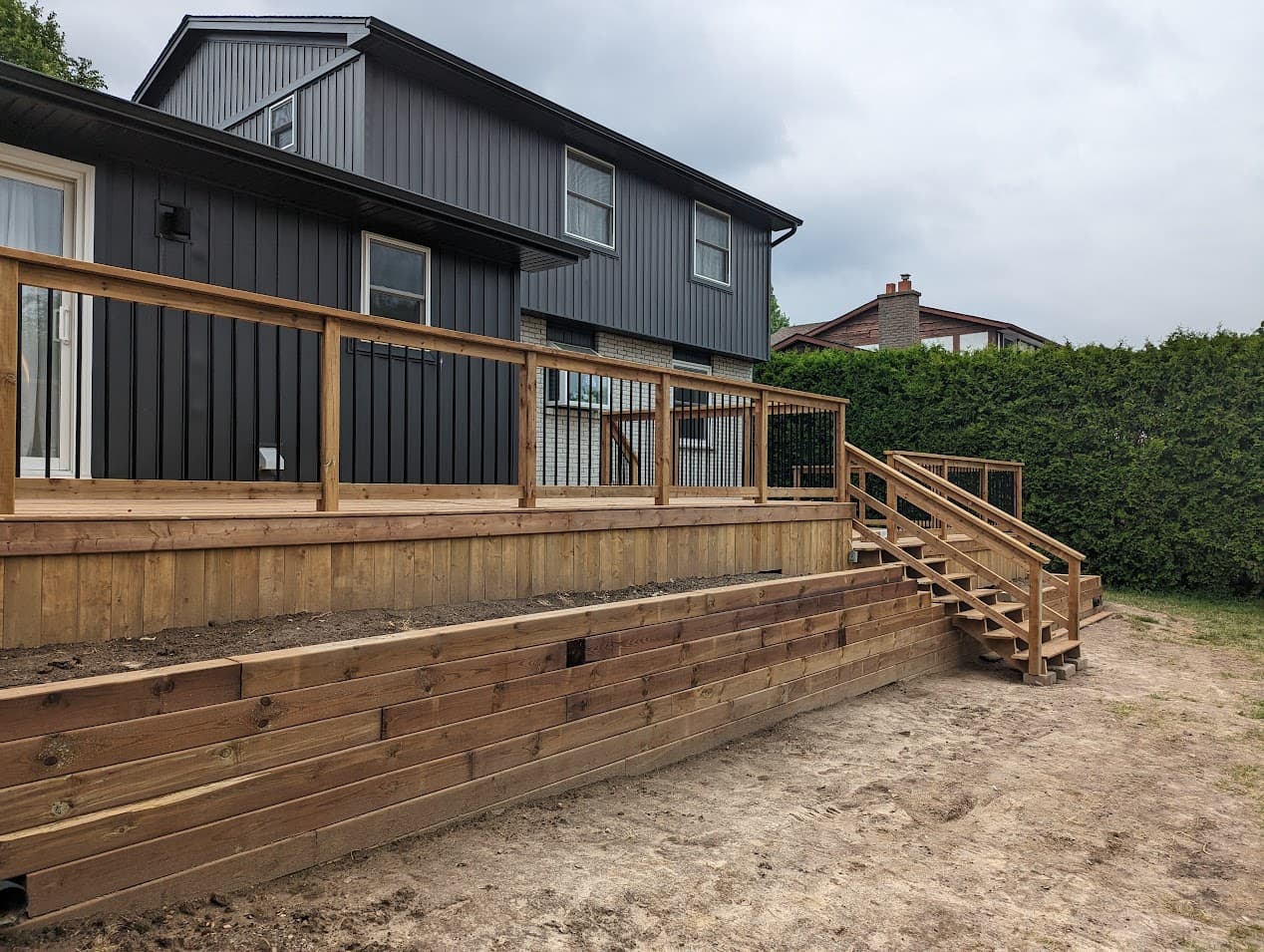
One of the most common questions homeowners ask us is: "What type of retaining wall should I get?" The answer depends on several factors — wall height, soil conditions, load requirements, aesthetic goals, and budget. This guide breaks down the three main retaining wall materials to help you make the right choice for your property.
Concrete Retaining Walls
Concrete — whether poured in place or installed as precast panels — is the most durable retaining wall option available. For taller walls (over 4–5 feet), heavily loaded applications (like retaining a slope above a driveway), and commercial projects, concrete is often the best choice.
Pros
- Extremely durable — 50–100 year lifespan
- Highest structural strength — handles heavy loads
- Monolithic structure with no joints to fail
- Best for tall walls and commercial applications
- Excellent freeze-thaw resistance when properly mixed
Cons
- Higher upfront cost than block or wood
- Requires formwork and curing time
- Less aesthetic versatility than block
- Heavier equipment required for installation
Best for: Walls over 4–5 feet tall, heavy surcharge loads (vehicles, structures above the wall), commercial applications, and situations where maximum lifespan matters more than upfront cost.
Interlocking Block Retaining Walls
Interlocking concrete block systems like Permacon and Allan Block are the most popular choice for residential retaining walls in Ontario. They offer a good balance of performance, aesthetics, and cost — making them the right choice for most residential applications.
Pros
- Wide range of colours, textures and styles
- Can be curved or angled to follow property contours
- Faster installation than concrete
- Ontario Building Code compliant with proper engineering
- Good freeze-thaw performance when properly installed
- 40–50 year lifespan with minimal maintenance
Cons
- For very tall walls (5+ feet), may require geogrid reinforcement
- More expensive than wood
- Individual blocks can shift if base preparation is inadequate
Best for: Most residential applications — walls up to 4–5 feet, garden terraces, yard grade changes, and anywhere aesthetic variety is important.
Wood and Timber Retaining Walls
Pressure-treated wood and hardwood timber walls offer a natural look that blends beautifully with landscaping. They're typically the most economical option but have a shorter lifespan than concrete or block.
Pros
- Most economical upfront cost
- Natural aesthetic that complements landscaping
- Suitable for low-to-medium walls (up to 3–4 feet)
- Easier to install on sites with limited access
- Can be stained or sealed to match desired colour
Cons
- Shorter lifespan (20–40 years) vs. concrete or block
- Requires periodic maintenance (staining/sealing)
- Not ideal for walls in constant wet conditions
- Not recommended for walls over 4 feet
Best for: Garden terraces, raised planting beds, low-to-medium height grade changes, and situations where natural aesthetics and lower upfront cost are the priorities.
How to Choose: Quick Decision Guide
- Wall over 5 feet tall? → Concrete
- Retaining a driveway or heavy structure above? → Concrete
- Residential wall, 2–5 feet, want aesthetic variety? → Interlocking Block
- Garden terrace or raised bed, under 3 feet? → Wood or Block
- Most economical option? → Wood
- Maximum lifespan? → Concrete
Still not sure? Contact us for a free site assessment. We'll evaluate your specific property conditions and give you an honest recommendation before you make any commitments.