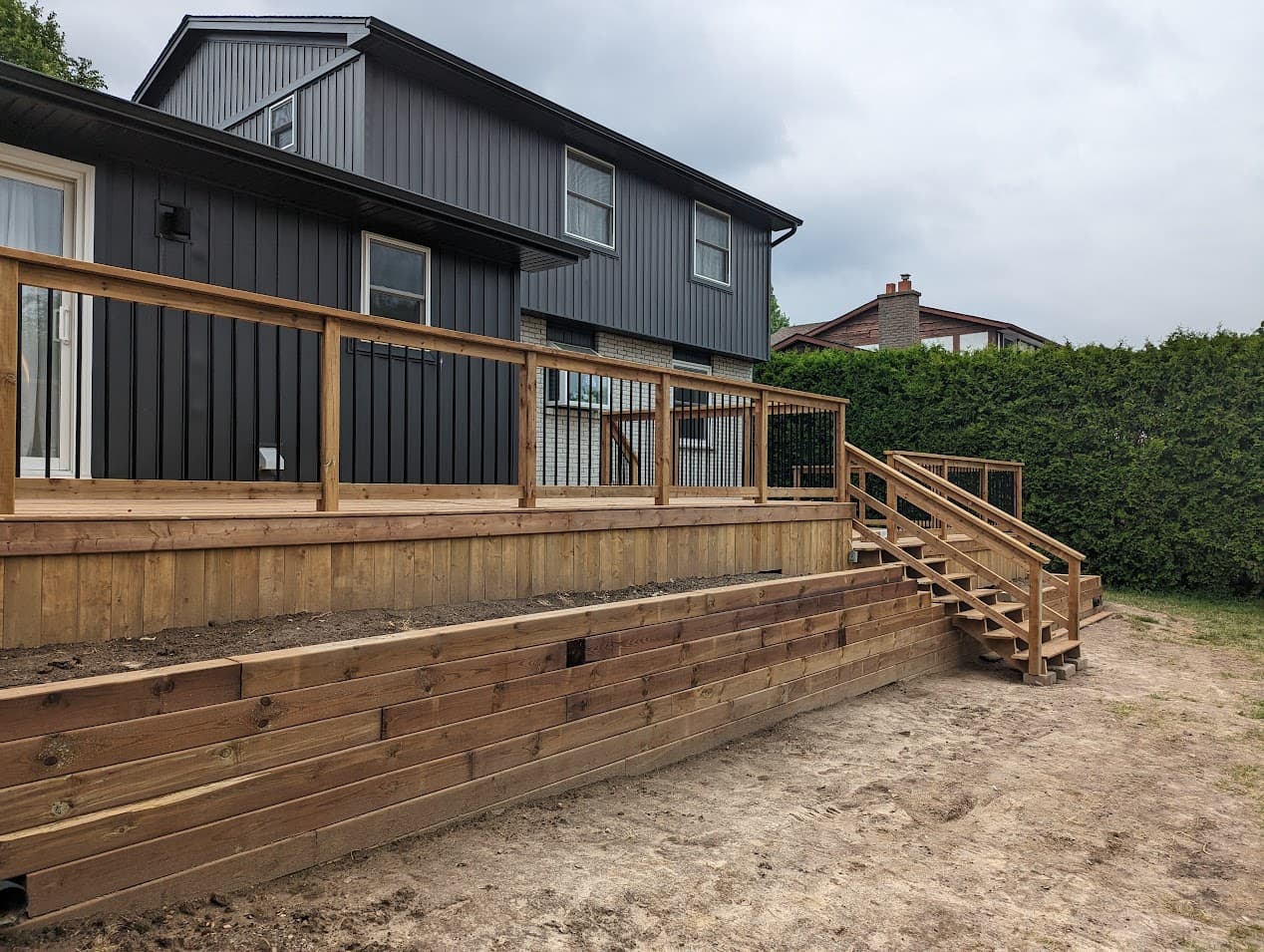
One of the most common questions we get from homeowners planning a retaining wall is: "How long will it last?" The answer varies significantly depending on the material, construction quality, drainage design, and site conditions. Here's what you can realistically expect from each wall type.
Concrete Retaining Wall Lifespan: 50–100 Years
A properly built concrete retaining wall — whether poured in place or precast — is the most durable option available. With proper drainage and good quality concrete, these walls routinely last 50–100 years with minimal maintenance. Many concrete retaining walls from the mid-20th century are still in service today.
The main threats to concrete wall longevity are:
- Inadequate drainage: Water pressure behind the wall is the primary cause of concrete wall failure. Proper weeping tile and drainage outlets are essential.
- Insufficient reinforcement: Walls without adequate rebar for the load they're retaining can crack under pressure.
- Poor concrete mix: Low-quality concrete with inadequate air entrainment will suffer spalling from freeze-thaw cycling in Ontario's climate.
Interlocking Block Retaining Wall Lifespan: 40–50 Years
Quality interlocking concrete block systems like Permacon and Allan Block are designed and tested for retaining wall applications. A properly installed block wall with good drainage and base preparation will typically last 40–50 years, and some well-maintained walls last longer.
Factors that shorten block wall lifespan:
- Inadequate base preparation: A poorly compacted base leads to settlement and block shifting. This is the most common installation shortcut that leads to premature failure.
- Missing geogrid: Taller block walls require geogrid reinforcement to distribute load and prevent the face from rotating outward. Without it, tall block walls are prone to failure.
- Blocked drainage: As with all wall types, poor drainage is the enemy of longevity.
Wood Retaining Wall Lifespan: 20–40 Years
Wood retaining walls have a significantly shorter lifespan than concrete or block, but "20–40 years" represents a wide range that reflects the importance of construction quality and maintenance.
- Pressure-treated lumber (CA-B rated): 20–30 years with moderate maintenance
- Hardwood timber (oak, black locust): 25–40 years in good conditions
The factors that most affect wood wall longevity:
- Drainage: As with all walls, water is the enemy. A wood wall with poor drainage may fail in 10–15 years rather than 30.
- Maintenance: Regular staining and sealing every 2–4 years significantly extends wood wall life. A well-maintained wood wall consistently outlasts a neglected one by 10–15 years.
- Wood grade: Using proper ground-contact rated pressure-treated lumber (CA-B or better) is essential — using lesser grades or untreated wood dramatically shortens lifespan.
- Post depth: Wood posts must be buried deep enough to resist the lateral pressure of the retained soil. Insufficient post depth is a common installation shortcut that leads to rapid failure.
What Matters More Than Material: Construction Quality
Here's the honest truth: a poorly built concrete wall can fail in 10 years, while a well-built wood wall can last 40. Construction quality — particularly drainage design and base preparation — matters at least as much as material choice.
The three most important construction factors affecting retaining wall lifespan are:
- Drainage: Proper weeping tile, gravel backfill, and drainage outlets prevent hydrostatic pressure — the #1 cause of wall failure.
- Base preparation: Adequate excavation depth, proper compaction, and correct base material prevent settlement and movement.
- Correct sizing for the load: A wall that is undersized for the height of soil it's retaining, or the loads above it, will fail regardless of material quality.
Signs Your Retaining Wall Is Failing
Regardless of material or age, watch for these warning signs:
- Visible bowing or leaning outward
- Horizontal cracks (most serious — indicates lateral pressure exceeding wall capacity)
- Soil erosion behind or at the base of the wall
- Drainage outlets that were working and have stopped
- Multiple blocks or sections that have shifted
If you're seeing these signs, don't wait. Contact us for a free assessment — the sooner a wall problem is addressed, the less expensive the fix.